Data Patterns in Nordic Card Play: How Analytics Tools Guide Choices on Licensed Platforms
Kai Lange · Oct 24, 2026

Data Patterns in Nordic Card Play: How Analytics Tools Guide Choices on Licensed Platforms
Experts tracking card play across Nordic licensed platforms have documented consistent data patterns that shape player decisions during online sessions, and these patterns emerge from aggregated gameplay logs collected through regulated operators in Sweden, Finland, Norway, and Denmark. Platforms operating under national licensing frameworks record metrics such as bet sizing distributions, fold frequencies, and session durations, which analytics tools then process to identify recurring sequences in card outcomes and betting behaviors.
Research indicates that players on these platforms often adjust their approaches based on historical data summaries provided by the tools, while operators integrate compliance checks that align with regional regulatory requirements. Data from October 2026 updates shows increased adoption of real-time pattern recognition modules on several licensed sites, where users receive notifications about deviation from established statistical norms during play.
Core Data Patterns Observed in Nordic Card Games
Analysts reviewing transaction records and hand histories from licensed Nordic platforms note several recurring patterns, including clustered betting aggression during specific hand ranges and time-of-day variations in session lengths. These patterns appear across poker variants and other card games offered through authorized channels, where datasets compiled over multiple quarters reveal correlations between player position and average pot sizes.
Studies from academic sources have examined how such patterns influence subsequent choices, for instance when tools flag an unusually high continuation bet rate and prompt users to review their historical performance metrics. Operators maintain these datasets under strict data protection rules, which allow for anonymized analysis while restricting individual profiling beyond licensed operational needs.
Analytics Tools Deployed on Licensed Platforms
Multiple Nordic operators employ integrated analytics suites that process live and archived data streams, combining elements like probability calculators, opponent modeling interfaces, and trend visualization charts. These systems draw from centralized databases maintained by the platforms themselves, ensuring that all insights remain tied to verified gameplay rather than external sources.
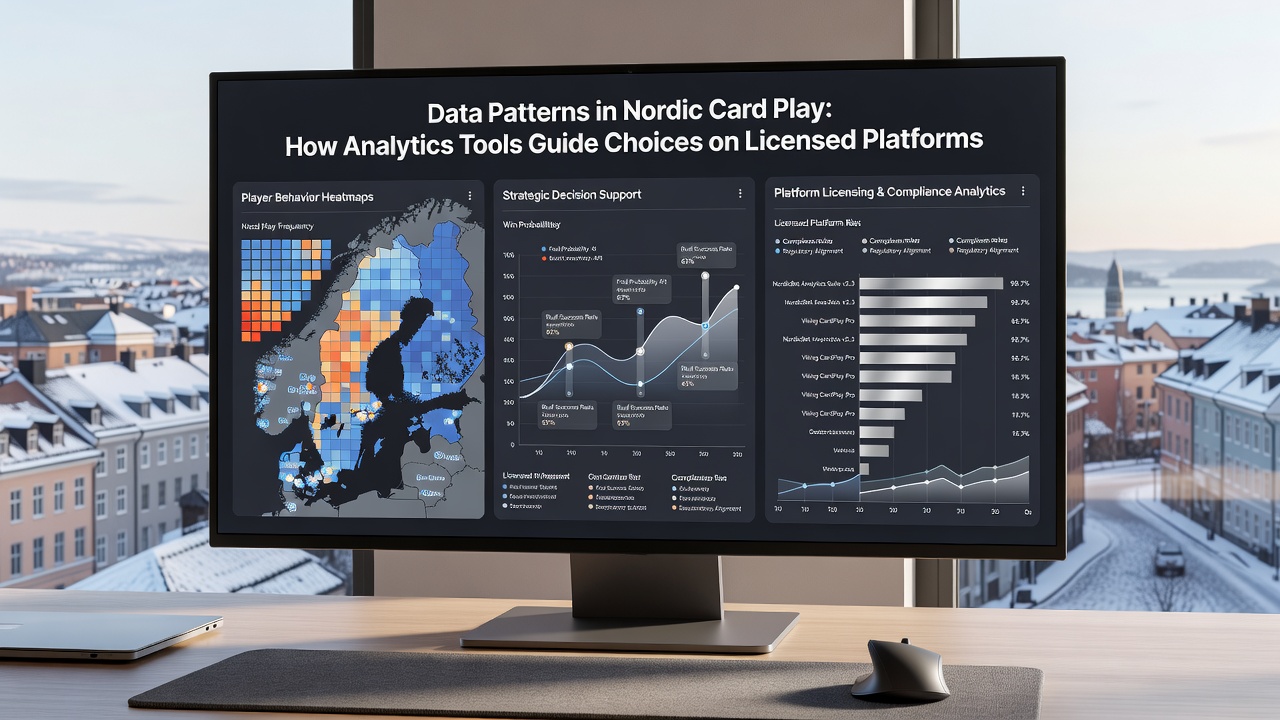
Users access these tools through account dashboards that display customized reports, and the software highlights deviations such as shifts in pre-flop raise percentages across different stake levels. According to findings published by the International Gaming Institute at the University of Nevada, similar tool architectures have been tested in controlled environments to measure their impact on decision consistency over extended periods.
How Tools Translate Patterns Into Player Guidance
Analytics platforms convert raw data into actionable summaries by applying statistical filters that isolate high-frequency events, such as river call success rates or multi-street bluff frequencies. Players then review these outputs before or between sessions, allowing adjustments based on aggregated benchmarks rather than isolated incidents.
Platform logs from 2025 through October 2026 demonstrate that sessions incorporating tool-assisted reviews often feature narrower ranges of bet sizing compared to unassisted play, while maintaining compliance with platform terms that prohibit automated scripting. The tools themselves operate within boundaries set by licensing authorities, which require human oversight for any strategic recommendations generated from the data.
One documented case involved a cohort of players on a Finnish-licensed site who used pattern reports to refine their responses to common river scenarios, resulting in measurable changes to their overall aggression indices tracked by the system. Such adaptations remain individual and voluntary, with operators providing disclaimers that the data reflects historical trends only.
Regulatory Context Shaping Tool Availability
Licensed Nordic platforms must adhere to national rules governing data usage and player information, which directly affects how analytics features are presented. Regulators in the region mandate transparency around data sources and prohibit certain predictive functionalities that could cross into prohibited assistance categories.
Reports compiled by the European Gaming Association outline how these frameworks encourage the development of educational analytics modules while limiting real-time automated advice. This environment has led operators to focus on post-session reviews and historical pattern matching rather than live overlays in many cases.
Conclusion
Data patterns in Nordic card play continue to inform choices through structured analytics tools on licensed platforms, with ongoing updates reflecting new datasets and regulatory refinements. Observers note that these systems emphasize compliance and historical review, providing structured information that players integrate at their own discretion. As platforms evolve through 2026 and beyond, the interplay between recorded gameplay metrics and user decision processes remains a central element of regulated card gaming environments across the Nordic region.